

APTADEGRAD: A ground-breaking effort to treat diabetic foot ulcers.

Diabetic foot ulcers (DFUs) are a significant complication and an unmet clinical condition. DFUs can lead to hospitalisation, limb amputation, and even death, with a high recurrence rate. The EU-funded APTADEGRAD project will provide a potential solution by developing a novel therapy based on aptamer-based lysosome-targeting chimaeras (LYTAMERs) to heal DFUs.

The problem

Diabetes mellitus, has become a global public concern with prevalence rising rapidly over past decades, with approximately 500 millions of patients worldwide. Diabetic foot ulcers (DFUs) a major complication of diabetes, occur in ~25% of patients, with a five-year recurrence rate of ~65%. DFUs often end in hospitalization, with limb amputations in up to 60% of cases. DFU related mortality is 5% within twelve months, rising to 42% after five years,.

Impaired wound healing in diabetes is multifactorial: Peripheral neuropathy and ischemia from peripheral vascular disease combine with risk factors such as high plantar pressures and obesity to contribute to DFU onset. 

Despite high prevalence and its major impact on the quality of life, no effective treatment has been approved, so DFU remain a highly unmet clinical condition. Standard DFU treatments are limited to surgical debridement, dressings, vascular assessment, and glycemic control, among others. New early-stage preventative and long-term supportive therapies are essential to mitigate the social and economic impact of DFUs

Our solution

Our vision is to obtain in vivo proof-of-concept for a novel, first-in-class, therapy using aptamer-based Lysosome Targeted Chimeras (LYTACs) to heal diabetic foot ulcers (DFUs).  The therapy will target key proteins responsible for impaired healing in diabetic wounds, offering a controlled and dose-dependent reduction of these proteins.

We expect this technology may offer a cost-effective, off-the-shelf, ready-to-use, scalable, chemical-like therapy which will be easily applied to diabetic (and other) wounds using an adapted hydrogel delivery system.

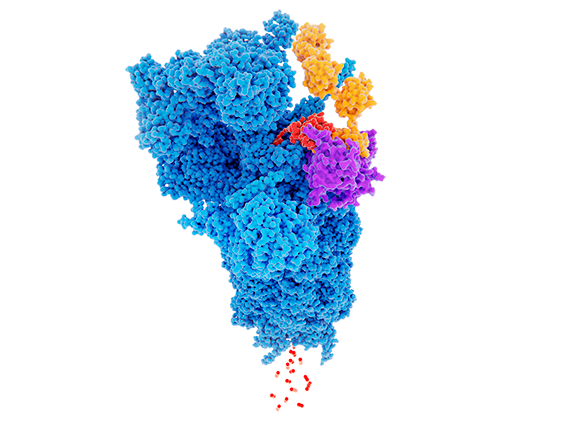
Proteasome degrading a proteine

The technology

The aptamer-based lysosome target chimeras (LYTAMERS) we are going to develop in this project are capable of inducing the lysosomal-targeted degradation of extracellular and membrane proteins. Our main hypothesis is that a LYTAMER approach will deliver specific, targeted degradation of proinflammatory markers in DFU. Usch as IL-1β, its receptor IL-1R1, and MMP-9/2, which are central to DFU pathology

LYTAMERs consist of:

  1. a ligand of the protein of interest (POI), such as a small molecule or selectively antibody,
  2. a linker and
  3. an agonist ligand of an endocytic membrane receptor.

Workpackage structure

In WP1 will screen highly selective aptamers to MMP-9, IL-1β, using a SELEX and a CELL-SELEX strategy for IL-1R1 (WP1). The LYTAMERs will be designed and its parts conjugated using click-chemistry reactions to generate a first generation of LYTAMERS candidate for their assessment in vitro. A second generation of LYTAMERs will be synthesized after their optimization thanks to in silico methods and chemical modifications to increase their affinity and resistance to degradation. 


In WP2 the candidates will be evaluated in vitro to determine binding affinity, cytocompatibility, and efficient target degradation. Studies in wound cells (keratinocyte, fibroblast, immune) will determine biological efficacy, while the synergetic effect of degrading several targets in the inflammation cascade will be explored and comparison to blocking strategies will be studied. 


LYTAMER toxicity will be evaluated in vitro and in vivo, including PK/PD and biodistribution studies (WP3). 


WP4 will test efficacy and Mechanism of Action of LYTAMERs using an ex vivo human wound model and the validated db/db in vivo wound model. 


LYTAMERs will be incorporated into hydrogels for biological administration, with detailed release and bioactivity kinetics evaluation. 


In WP6, new mAbs and mAbs-LYTACs to MMP-9, IL1-b, IL1-R1 will be developed as both positive control and an important mitigation option. 


WP7 and WP8 will provide regulatory support and ensure effective project management, communication and exploitation of outputs.  

Partners

Lincbiotech, SL (aptadegrad.es)

It is a SME, spin-off company from the Health Research Institute of Santiago de Compostela (IDIS). The company has developed a proprietary technology platform for the rapid development and assessment of novel aptamer-based LYTACs and PROTACs against proteins of interest. The developed platform provide high flexibility as it can 1) deliver candidates for the targeted degradation of intracellular (PROTACs) or extracellular and membrane targets (LYTACs) by changing the tail of its compounds to trigger the proteasomal or lysosomal degradation; 2) address a large number of proteins of interest involved in several conditions, by customizing the warhead of its compounds; and 3) it is compatible with antibodies, peptides or small molecules that can be conjugates as warheads using click chemistry techniques. The company has already delivered candidates against intra- (SARS-CoV-2 Nucleocapsid), extracellular (MMP9) and membrane targets (CD47 and CD44).

University of Hull (HULL).

The advanced wound group is led by Prof. Matthew Hardman (h-index 37, >5000 citations), a world-leading expert in wound biology. Prof Hardman brings to the project over 20 years’ experience in translational wound research. He has extensive expertise in commercialisation and industry partnering in the advanced wound care space, having worked with 10+ industry partners across a range of technology areas. Hull will deliver a suite of in vitro, in vivo and ex vivo studies carefully designed to demonstrate the pre-clinical efficacy of LYTAMERs for treatment of DFUs. In vivo studies will be led by Dr Holly Wilkinson, UK Home Office animal licence holder and outstanding early career academic.

ICVS/3B’s (3Bs)

As an associate laboratory of UMinho is one of the most productive (papers & generated IP) and cited groups in Portugal. 3B’s is World recognized for the development of biomaterials from natural (including marine) polymers for applications in tissue engineering and regenerative medicine (TERM) of tissues (bone, cartilage, skin, IVDs, tendon, meniscus and neurological tissues), and for the innovative work on stem cell isolation and differentiation.3Bs has been involved in several projects for would healing, hydrogels and extracellular matrices. 3B´s has coordinated several large (+20) EU research projects, including 9 ERC grants.

SYNABS

An SME located in Belgium. SYnAbs’ unique technologies (conformational peptide, SYnDNA vector, SYnCell syngeneic cell, in-house adjuvant) coupled with its strong expertise in breaking immune tolerance in proprietary rat-LOU species, ensure the generation of high specificity and higher affinity antibodies. Natural in-vivo maturation and targeting epitopes that are difficult to express in their native and functionally active conformation has led, among others, to the generation of SYnAbs anti-CD2 rat monoclonal Siplizumab (licensed to MedImmune, MEDI-507), and numerous other functional therapeutic antibodies.

Health Research Institute of Santiago de Compostela (IDIS)

The IDIS is a R&D organisation composed by the synergies of two institutions, University of Santiago de Compostela and University Clinical Hospital of Santiago de Compostela (CHUS). The Clinical Neurosciences Research Laboratory (lead by Dr. Tomás Sobrino), develop research lines involved in the knowledge of theranostics, toxicity, biomarkers, pharmacology and preclinical models mainly focused on nervous system diseases and vascular diseases.

Last News

EIC-funded project to find novel solutions to Diabetic Foot Ulcers

The Galician biotech company Lincbiotech, headquartered in Ourense with laboratories in Santiago de Compostela, will lead a project funded by the prestigious European Innovation Council (EIC) through the Pathfinder Open 2022 call. The project aims to develop molecules (protein degraders) that leverage the internal mechanism of cells to eliminate proteins

Read More »

REsults

ARE you interested in this project

Let’s get in touch

The data provided through this form will be processed by Aptadegrad, S.L CIF B09800905 domicile at Parque Tecnológico de Galicia, Edificio Tecnópole l, San Cibrao das Viñas 32911 – Ourense, in accordance with the provisions of our privacy policy in order to send you information about our products / services. The data collected by this form will not be transferred to third parties except by legal obligation. We remind you that you have the right to access, rectification, limitation of treatment, deletion, portability and opposition to the processing of your data by directing your request to the indicated postal address or to the email dpd@aptadegrad.es. You can also contact us for any additional clarification. In case of non-acceptance, your data will not be processed.

Leave us your contact information to get in touch with you

Invest in Aptadegrad, a great opportunity to create value with rapid development of new compounds.

The data provided through this form will be processed by Aptadegrad, S.L CIF B09800905 domicile at Parque Tecnológico de Galicia, Edificio Tecnópole l, San Cibrao das Viñas 32911 – Ourense, in accordance with the provisions of our privacy policy in order to send you information about our products / services. The data collected by this form will not be transferred to third parties except by legal obligation. We remind you that you have the right to access, rectification, limitation of treatment, deletion, portability and opposition to the processing of your data by directing your request to the indicated postal address or to the email dpd@aptadegrad.es. You can also contact us for any additional clarification. In case of non-acceptance, your data will not be processed.